
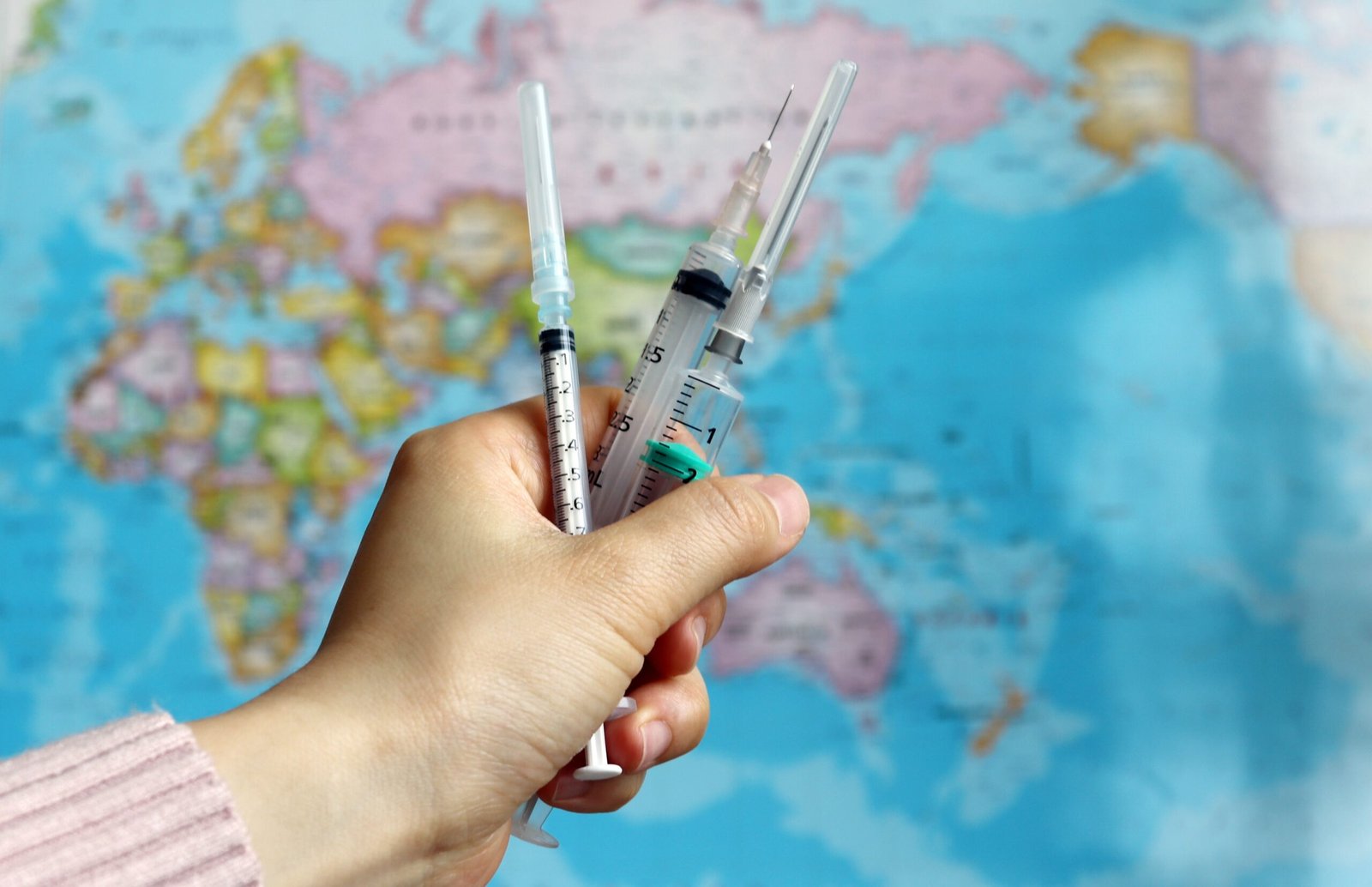
Why Are Travel Vaccinations Important Before Travelling Abroad?
Travelling to another country can expose you to infections that may be less common in the UK. Differences in sanitation, food preparation, water quality, insect populations and local disease patterns can increase the risk of certain illnesses.
Travel vaccinations help prepare your immune system to recognise and fight particular infections before you are exposed to them.
Getting appropriate protection before departure can help you:
- Reduce the risk of catching certain infectious diseases.
- Protect yourself when visiting areas with higher infection rates.
- Meet specific vaccination requirements for international travel.
- Reduce the likelihood of bringing certain infections back home.
- Travel with greater confidence and peace of mind.
The vaccinations you need depend on your individual circumstances. It is therefore important to obtain destination-specific advice rather than following a general vaccination list.
1. Travel Vaccinations for Africa
Africa is a diverse continent, and vaccination recommendations vary considerably between countries and even between different regions of the same country.
Travellers visiting certain areas may need protection against yellow fever, particularly when visiting countries where the disease is present or where vaccination certificates are required for entry.
Other vaccinations that may be recommended, depending on your itinerary, include:
Hepatitis A: This infection can spread through contaminated food and water. Vaccination may be recommended for travellers visiting areas where sanitation and food hygiene conditions increase exposure risks.
Typhoid: Typhoid is a bacterial infection that can spread through contaminated food and water. Vaccination may be recommended for people travelling to certain areas with higher risks.
Meningitis ACWY: Vaccination may be recommended for travel to parts of the African meningitis belt, particularly during periods of increased transmission.
Rabies: Travellers spending time outdoors, visiting remote communities or expecting contact with animals may need to consider rabies vaccination.
It is also important to discuss malaria prevention. Depending on the country and specific region, antimalarial medication and insect-bite precautions may be recommended.
2. Travel Vaccinations for Asia
Asia attracts millions of international visitors every year, but some destinations have a higher risk of infections transmitted through contaminated food, water or insect bites.
Depending on your travel plans, the following travel vaccines may be considered:
Hepatitis A: Often considered for travellers visiting areas where contaminated food and water may present a risk.
Typhoid: May be recommended for people visiting destinations where food and water hygiene conditions increase the likelihood of infection.
Japanese Encephalitis: This mosquito-borne viral infection occurs in parts of Asia and the western Pacific. Vaccination may be recommended for travellers spending extended periods in rural areas or undertaking activities that increase mosquito exposure.
Rabies: Travellers planning outdoor activities, visiting remote locations or spending time around animals may benefit from discussing rabies vaccination.
Hepatitis B: This vaccine may be recommended depending on the duration of your stay, planned activities and potential exposure risks.
If you are visiting countries such as India, Thailand, Vietnam or Indonesia, do not assume that every vaccine is necessary. A professional assessment of your exact destination and itinerary is the best way to determine suitable protection.
3. Travel Vaccinations for South America
South America offers a wide range of travel experiences, from visiting major cities to exploring tropical rainforests and remote rural areas.
However, certain regions have health risks that travellers should consider before departure.
Depending on your destination, possible vaccination recommendations include:
Yellow Fever: This vaccine is important for eligible travellers visiting certain areas where yellow fever transmission occurs. Some countries may also require proof of vaccination depending on your travel history and route.
Hepatitis A: Travellers visiting areas with an increased risk of food and water contamination may be advised to receive this vaccine.
Typhoid: Vaccination may be recommended for travellers visiting locations where sanitation and food hygiene conditions increase infection risks.
Rabies: This may be considered for travellers undertaking outdoor activities or visiting areas where access to prompt medical treatment may be limited.
If you are planning to explore the Amazon rainforest or other remote destinations, your travel health assessment should also consider insect-bite prevention and malaria risks.
4. Travel Vaccinations for the Middle East
The Middle East attracts travellers for holidays, business trips, religious journeys and family visits.
Depending on the country and purpose of travel, certain vaccinations may be recommended or required.
Hepatitis A: May be recommended depending on your destination and potential exposure to contaminated food or water.
Hepatitis B: May be considered based on your medical history, length of stay and planned activities.
Meningitis ACWY: Particularly important for eligible Hajj and Umrah pilgrims. Saudi Arabia has specific meningococcal vaccination requirements for pilgrims, which should be checked against current official guidance before travelling.
Routine vaccinations: Make sure your standard immunisations, including measles, mumps and rubella, are up to date.
If you are travelling for Hajj or Umrah, check the latest Saudi Arabian health requirements well before departure, as vaccination rules and documentation requirements can change.
5. Travel Vaccinations for Europe and North America
Many travellers assume that visiting Europe or North America does not require any additional vaccination planning. Although the risk of certain tropical diseases may be lower, some destinations and activities can still involve specific health risks.
Depending on your plans, a healthcare professional may discuss:
Routine vaccinations: Check that your standard UK vaccinations are up to date, including measles, mumps and rubella.
Tick-Borne Encephalitis: This vaccine may be recommended for travellers spending time in forests or rural areas of certain European countries and parts of Asia, particularly if hiking, camping or working outdoors.
Hepatitis A and B: These may be considered depending on your personal circumstances and travel activities.
Rabies: May be relevant for certain outdoor activities, animal contact or extended travel in remote locations.
Your travel itinerary matters more than simply choosing a continent. A city break and a long countryside expedition may involve very different health considerations.
6. When Should You Get Your Travel Vaccinations?
One of the most important parts of travel preparation is arranging your vaccinations early enough.
The NHS recommends seeking travel health advice at least four to six weeks before departure. Some vaccines require multiple doses, and your body may need time to develop protection after vaccination.
Ideally, consider booking your travel vaccination appointment around six to eight weeks before your trip whenever possible.
During your consultation, a healthcare professional may review:
- Your destination and travel dates.
- Previous vaccination records.
- The length of your stay.
- Planned activities and accommodation.
- Existing medical conditions.
- Current medication and allergies.
Even if your departure date is approaching, it is still worth seeking advice. Some protection may still be possible, depending on the vaccine and your travel circumstances.
Are All Travel Vaccinations Free on the NHS?
No. Some travel vaccinations are available free through the NHS, while others normally require payment through a private travel clinic.
The NHS routinely provides certain travel vaccines following an appropriate risk assessment. These include:
- Hepatitis A.
- Typhoid.
- Cholera.
- Polio, provided as part of the combined tetanus, diphtheria and polio vaccine.
Other vaccines, including yellow fever, rabies, Japanese encephalitis and hepatitis B for travel purposes, are generally available through private services.
Availability and eligibility should always be confirmed with the provider. A travel clinic can explain which vaccinations are suitable, whether they are NHS-funded or private and whether additional doses are required.
Travel Clinic in Plaistow at Newmans Pharmacy
Preparing for an international trip can be confusing when different destinations have different vaccination recommendations. Getting professional advice before travelling can help you understand which precautions are appropriate for your journey.
At Newmans Pharmacy, our travel health service provides consultations and a range of travel vaccinations in Plaistow to help protect travellers against destination-related health risks.
Our pharmacy team considers your itinerary, medical history, vaccination records and planned activities before discussing suitable protection.
What Travel Vaccinations Are Available?
Depending on your clinical assessment and vaccine availability, our travel clinic offers access to several important vaccinations, including:
- Hepatitis A and B vaccine
- Typhoid vaccine
- Yellow Fever vaccine
- Rabies vaccine
- Japanese Encephalitis vaccine
- Meningitis ACWY vaccine
- Tetanus, Diphtheria and Polio booster
- Cholera vaccine
We can also provide advice about antimalarial medication, insect-bite prevention and other travel health precautions.
Newmans Pharmacy is a designated Yellow Fever vaccination centre, providing eligible travellers with the required International Certificate of Vaccination or Prophylaxis (ICVP) following vaccination.
Why Choose Newmans Pharmacy for Travel Health Advice?
Our aim is to make travel health preparation convenient and straightforward.
Personalised Travel Assessment: Recommendations are based on your destination, travel duration, activities and medical history.
Professional Vaccination Services: Access a range of travel vaccines following an appropriate clinical assessment.
Travel Health Guidance: Receive advice about malaria prevention, food and water safety and other destination-related risks.
Convenient Plaistow Locations: Our two Barking Road branches make accessing travel health services easier for local residents.
Book Your Travel Consultation in Plaistow
If you are searching for a reliable travel clinic in Plaistow, Newmans Pharmacy can help you prepare for your upcoming journey.
You can visit either of our branches:
Newmans Pharmacy – Abbey Arms
376 Barking Road, London E13 8HL
Telephone: 020 7476 1326
Newmans Pharmacy – Greengate
524–526 Barking Road, London E13 8QE
Telephone: 020 8472 5054
Visit our Travel Clinic in Plaistow page to learn more about available vaccinations and arrange your consultation.
We recommend planning your appointment well before departure so there is sufficient time to complete any required vaccination courses.